

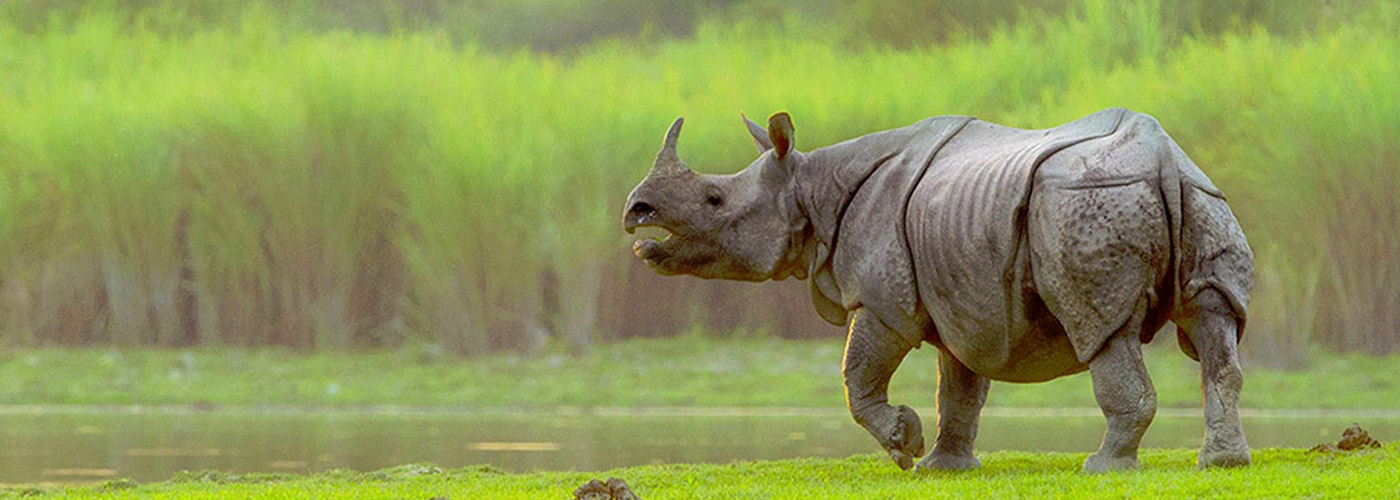
Kaziranga National Park is a renowned protected area located in the Indian state of Assam. Established in 1905 as a reserve forest, it was declared a national park in 1974 and later designated a UNESCO World Heritage Site in 1985 due to its significance as a conservation area for the endangered one-horned Indian rhinoceros.
The park spans an area of approximately 430 square kilometers and is situated in the floodplains of the Brahmaputra River. It is famous for its rich biodiversity, particularly for being home to the world’s largest population of Indian rhinoceroses. Additionally, Kaziranga is home to significant populations of other species such as tigers, elephants, wild water buffalo, and various bird species, including the rare Bengal florican.
Kaziranga’s landscape comprises wetlands, grasslands, and dense forests, creating diverse habitats for its wildlife. The park is also recognized for its successful conservation efforts, including anti-poaching measures and habitat management programs.
Visitors to Kaziranga National Park can explore the area through jeep safaris, elephant safaris, and boat rides, offering opportunities to observe the park’s wildlife in their natural habitat. The park is open to visitors from November to April, with the peak tourist season typically between December and February.
However, Kaziranga also faces challenges such as habitat fragmentation, human-wildlife conflict, and natural disasters like annual flooding from the Brahmaputra River. Conservation efforts continue to be crucial to ensure the long-term survival of the diverse wildlife inhabiting this unique ecosystem.