

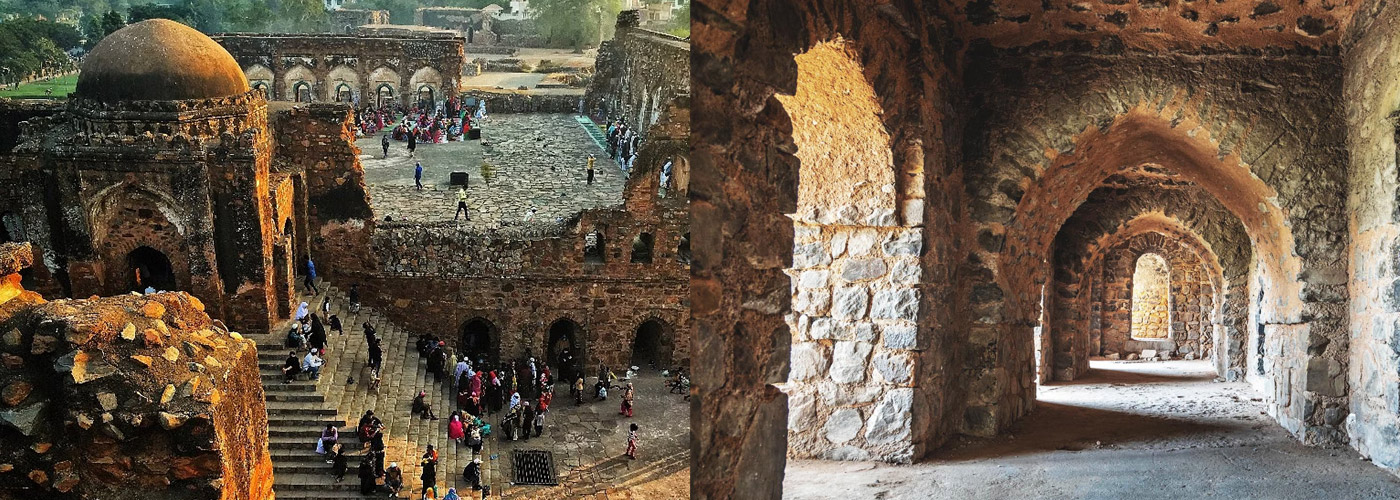
Kotla Firoz Shah, also known as Firoz Shah Kotla, is a historic fortress located in the heart of Delhi, India. Built by Sultan Firoz Shah Tughlaq, the fort stands as a testament to the architectural and cultural richness of the Delhi Sultanate period.
Constructed in the 14th century, Kotla Firoz Shah served as the fifth city of Delhi, known as Firozabad, during the reign of Sultan Firoz Shah Tughlaq (1351–1388). The fort is a splendid example of Indo-Islamic architecture, with a blend of Persian and Indian design elements.
One of the most striking features of the fort is its grand entrance, known as the Hathi Gate, adorned with intricate carvings and towering bastions. Inside, visitors can explore various structures, including a large congregational mosque known as the Jami Masjid, which showcases the distinctive architectural style of the Tughlaq dynasty.
The Ashokan Pillar, a prominent edifice within the fort, is of immense historical significance. Inscriptions on the pillar indicate that it was originally erected by Emperor Ashoka in the 3rd century BCE. Firoz Shah Tughlaq later transported it from Topra, Haryana, and installed it within the fort complex.
Another notable feature is the Baoli, an ancient stepwell designed for water conservation. It reflects the ingenuity of medieval engineering and architecture, with its multi-tiered structure leading to a water reservoir at the bottom.
Kotla Firoz Shah also holds religious importance. It houses a devotional structure known as the Jharna, dedicated to a mystical spring believed to have miraculous properties.
Today, the fort remains a significant historical site and a popular tourist destination in Delhi. Its well-preserved ruins and architectural marvels provide a window into Delhi’s illustrious past. The serene surroundings, coupled with the historical significance of the site, make Kotla Firoz Shah a must-visit for history enthusiasts and tourists exploring the cultural heritage of India’s capital city. Efforts to preserve and maintain the fort ensure that future generations can continue to appreciate its historical and architectural splendor.