

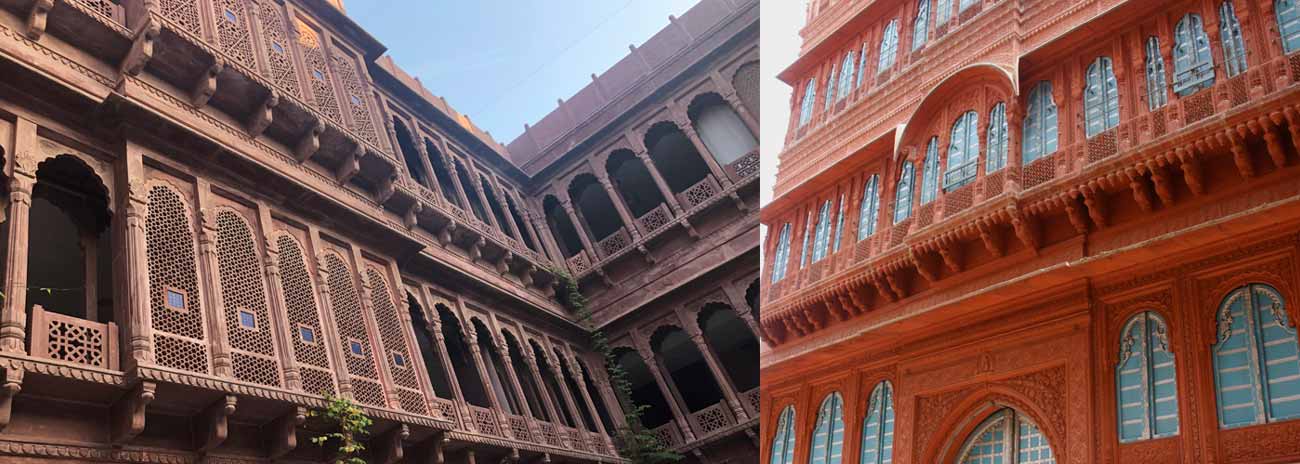
According to famous author and philosopher Aldous Huxley, the Rampuria Haveli is “the pride of Bikaner.” His observation following his visit to the Rampuria Haveli is justified in light of its age, majesty, and exquisiteness. First off, the Rampuria Haveli was built in the 15th century by Balujee Chalva, who was tasked with building regal and opulent residences that would suit the affluent merchant family Rampuria. The Haveli was built using Dulmera red sandstone as the primary building material, displaying the exquisite artistic skills that were in vogue at the time. One of the main and distinctive attractions of the Rampuria Haveli is the opulent and lavish interior halls and rooms, which are embellished and beautified with aesthetic objects of art; first-rate landscapes and portraits and artefacts made of good wood. In the drawing room of the Rampuria Haveli, Rajputana and Mughal architectural styles are seamlessly combined, which is very inspiring and wonderful.
The majority of havelis are currently on display for the general audience. Bhanwar Niwas is unquestionably one of the Rampuria Haveli’s most extravagantly magnificent embellishments. Bhanwarlalji Rampuria, an heir to a textile and real estate fortune, used the style and architecture typical of the 1920s when he built his home during that decade. The Bhanwar Niwas is now well-known among tourists as a guesthouse. There are more than twenty guest rooms, each of which is distinctive and unusual.