

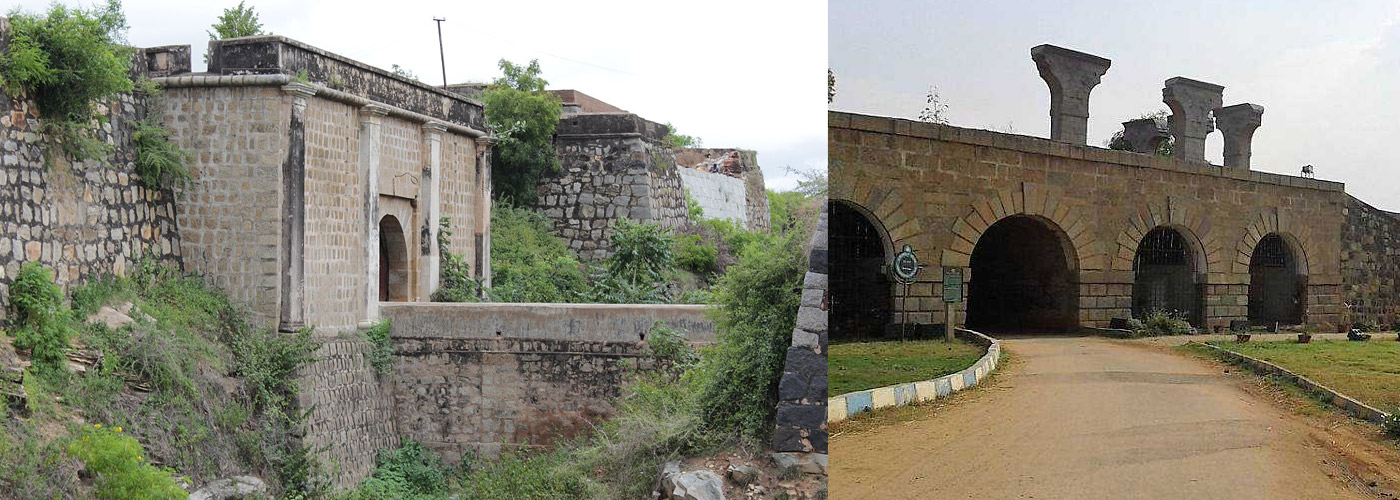
Srirangapatna Fort, located in the town of Srirangapatna in the state of Karnataka, India, holds significant historical and cultural importance. Built on an island formed by the river Cauvery, it is a formidable fortress that has witnessed several pivotal events in Indian history.
Constructed in the 15th century by the Vijayanagara Empire, the fort was later strengthened and expanded by Tipu Sultan, the famous ruler of the Kingdom of Mysore. Tipu Sultan, known for his resistance against British colonialism, made Srirangapatna his capital and took measures to fortify it against potential invasions.
The fort’s architecture is a blend of Hindu, Islamic, and Persian styles, reflecting the diverse cultural influences that shaped the region over the centuries. It is characterized by massive stone walls, bastions, and a complex network of gates and moats, providing a clear testament to the strategic acumen of its builders.
One of the most notable features within the fort is the Gumbaz Mausoleum, which houses the tombs of Tipu Sultan, his father Hyder Ali, and other members of the royal family. The structure is a splendid example of Indo-Islamic architecture, with a large dome and intricate carvings.
Srirangapatna Fort also witnessed the climactic Battle of Srirangapatna in 1799, during the Fourth Anglo-Mysore War. It was here that the combined forces of the British East India Company, led by General Harris, defeated Tipu Sultan, resulting in the end of Mysorean resistance against British rule.
Today, Srirangapatna Fort stands as a living testament to the rich history of the region and serves as a popular tourist attraction. Visitors can explore its well-preserved structures, including the Gumbaz, and gain a deeper understanding of the complex historical events that unfolded within its walls.
In summary, Srirangapatna Fort is a symbol of Karnataka’s historical legacy, embodying the cultural fusion and resilience of its people. It stands as a reminder of the valor of Tipu Sultan and the turbulent times in which he lived, making it a must-visit destination for history enthusiasts and tourists alike.