

The Teej Festival is one of the most cherished and colorful festivals celebrated across Rajasthan and many parts of northern India. Marking the arrival of the monsoon season, Teej is a vibrant celebration of love, devotion, marital bliss, and prosperity. Dedicated to Goddess Parvati and Lord Shiva, the festival holds deep religious and cultural significance, especially for married women who pray for the well-being and long life of their husbands, while unmarried women seek blessings for a loving and virtuous life partner.
History of the Teej Festival
The origins of Teej are rooted in Hindu mythology. According to ancient scriptures, Goddess Parvati performed severe penance and was reborn many times before Lord Shiva accepted her as his wife. Her unwavering devotion and determination symbolize eternal love, patience, and faith. The reunion of Shiva and Parvati is commemorated during Teej, making it a sacred occasion that celebrates the strength of marital relationships and spiritual devotion.
Over the centuries, Teej evolved into a major cultural festival in Rajasthan, Uttar Pradesh, Haryana, Punjab, Bihar, Madhya Pradesh, and other regions of India. In Rajasthan, the royal families played an important role in preserving and promoting the grand celebrations, particularly in Jaipur.
Rituals of the Teej Festival
The rituals associated with Teej combine religious worship with joyful community celebrations.
Fasting and Prayer
One of the most important rituals is the Nirjala Vrat (fast), observed by many married women without food or water throughout the day. They pray to Goddess Parvati for the health, prosperity, and longevity of their husbands. Unmarried girls also observe the fast, seeking blessings for a happy marriage.
Worship of Goddess Parvati
Women gather in temples or at home to offer flowers, fruits, sweets, vermilion, bangles, and sacred prayers to Goddess Parvati. Special hymns and devotional songs are sung to honor her divine union with Lord Shiva.
Mehndi and Traditional Attire
Applying intricate mehndi (henna) designs is an essential part of the celebration. Women dress in colorful sarees and lehengas, especially in shades of green, red, and yellow, which symbolize fertility, prosperity, and new beginnings. Traditional jewelry, glass bangles, and floral ornaments complete the festive look.
Swings and Folk Songs
Beautifully decorated swings are hung from large trees in gardens and courtyards. Women gather to sing traditional Teej songs while enjoying the swings, celebrating the joy of the rainy season and the beauty of nature.
Teej Celebrations in Rajasthan
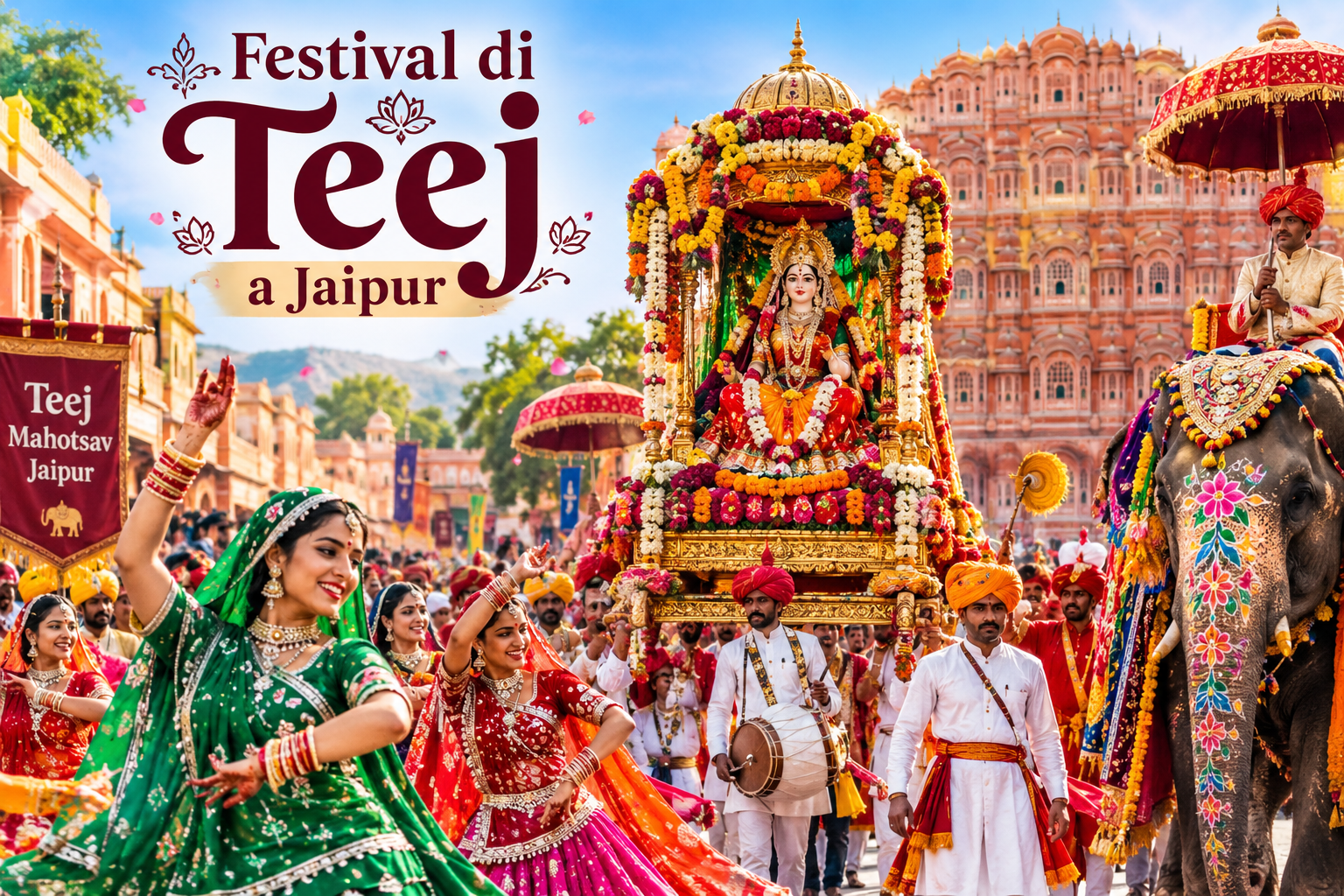
Rajasthan is renowned for its magnificent Teej celebrations, with Jaipur hosting the most famous festivities. The highlight is the Royal Teej Procession, where the beautifully decorated idol of Goddess Teej is carried through the Pink City’s historic streets on an ornate palanquin.
The procession features:
- Decorated elephants, camels, and horses
- Traditional Rajasthani folk dancers
- Musicians playing local instruments
- Royal guards in ceremonial attire
- Decorated chariots and cultural performances
- Thousands of devotees and visitors
Cities such as Udaipur, Jodhpur, Bundi, Kota, and Bikaner also celebrate Teej with temple rituals, fairs, music, and traditional performances.
Traditional Foods
No Teej celebration is complete without delicious festive delicacies. Families prepare and share a variety of sweets and snacks, including:
- Ghewar
- Malpua
- Feni
- Kheer
- Gujiya
- Puri with seasonal vegetable dishes
These traditional recipes are an important part of family gatherings and festive hospitality.
Cultural Significance
Beyond its religious importance, Teej celebrates family values, women’s traditions, community harmony, and the rejuvenating power of nature. The arrival of the monsoon is welcomed as a blessing that brings fertility to the land, supports agriculture, and offers relief from the summer heat.
The festival also preserves Rajasthan’s rich heritage through folk music, dance, handicrafts, colorful attire, and age-old customs that continue to be passed down through generations.
Best Places to Experience the Teej Festival
Visitors can witness spectacular Teej celebrations in:
- Jaipur
- Udaipur
- Jodhpur
- Bundi
- Kota
- Bikaner
- Alwar
Among these, Jaipur offers the grandest experience with its historic royal procession and vibrant cultural events.
Why Tourists Love the Teej Festival
For international and domestic travelers, Teej offers a unique opportunity to experience authentic Indian traditions. The colorful processions, royal heritage, folk performances, traditional cuisine, and warm hospitality create unforgettable memories and provide excellent opportunities for cultural photography.